Trying to choose between Cambridge and Somerville for your first investment? You are not alone. For many first-time investors, the real challenge is not whether demand exists. It is figuring out which city better matches your budget, risk tolerance, and preferred property type. This guide breaks down the numbers, housing stock, tenant dynamics, and local rules so you can make a smarter first move. Let’s dive in.
Both Cambridge and Somerville are expensive, supply-constrained markets with strong rental demand. As of March 31, 2026, Zillow reported an average home value of $1,041,569 in Cambridge and $940,239 in Somerville, with median sale prices of $1,035,000 and $873,333, respectively. Average rents were also close, at $3,456 in Cambridge and $3,519 in Somerville, according to Zillow market data.
The headline takeaway is simple: Cambridge usually costs more to enter, while Somerville can offer a lower purchase price with similar rent levels. That does not automatically make Somerville the better deal, but it does make the comparison worth a closer look.
If you are buying your first investment, entry cost matters. Cambridge remains the higher-capital market by both average home value and median sale price. That means you may need a larger down payment, more reserve capital, and a clearer financing plan to compete there.
Somerville is not cheap, but it is somewhat more accessible on the purchase side. It is also moving quickly. Zillow reported median days to pending of 22 days in Cambridge and 13 days in Somerville as of March 31, 2026, which suggests buyers in Somerville often need to act fast when the right property hits the market.
Cambridge offers a wider mix of housing types, which can be helpful if you are still figuring out your investment style. City data shows that as of June 30, 2025, 27.6% of dwelling units were condominiums and 14.5% were in mixed-use buildings. The city also has meaningful shares of two-unit, three-unit, and larger multifamily buildings, while 34.1% of dwelling units were in buildings with 100 or more units, according to Cambridge demographic data.
For a first-time investor, that often translates to more choices in condos, mixed-use opportunities, and higher-density multifamily formats. If you want a property that feels operationally simpler than a classic triple-decker, Cambridge may give you more paths to explore.
Cambridge can be a strong fit if you want:
The tradeoff is straightforward. You will usually pay more to get in.
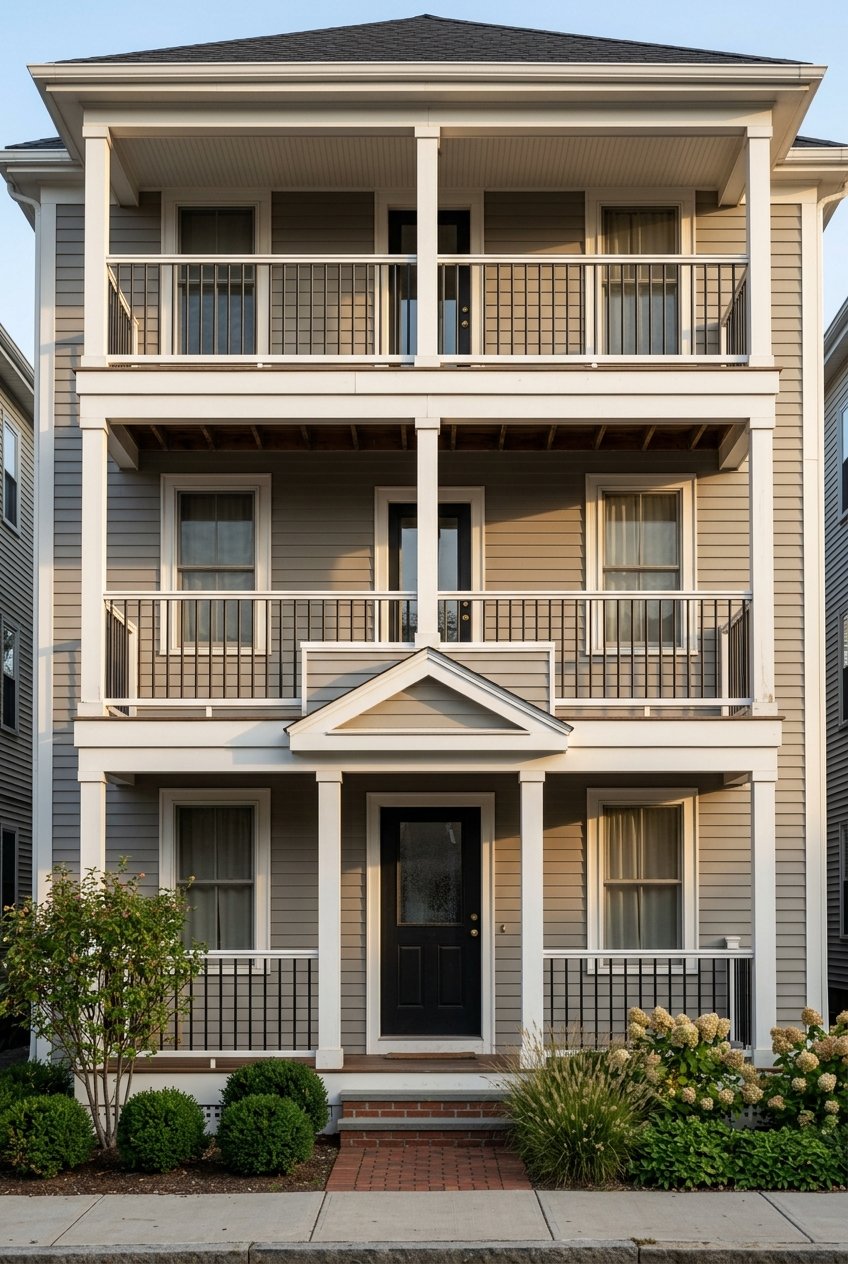
Somerville stands out as the more classic small-multifamily market. Its 2025 housing needs assessment says more than half of housing units are in two- to four-unit structures, including 27.7% duplexes and 26.8% three- or four-unit buildings. That makes Somerville especially relevant if your first-investment vision involves a traditional owner-occupied multifamily or a small rental building.
The same Somerville housing needs assessment also notes that condos and larger apartment buildings are an important part of the local inventory. Still, if you picture a classic New England multifamily, Somerville is more likely to line up with that goal.
Somerville may be the better fit if you want:
That said, operating in Somerville can come with more complexity, especially if you are considering future condo conversion or certain value-add strategies.
Cambridge has a large renter population and a tenant base shaped by both education and employment. City data shows 66.5% of occupied housing units are renter-occupied, with an average household size of 2.05. The city also reports a median household income of $130,748, and identifies professional and business services plus education and health services as major employment sectors.
There is also a notable student presence. According to the city, 93.3% of the group-quarter population is in college or university student housing. For investors, that supports the idea that Cambridge demand is tied to a mix of students, academic institutions, and higher-income professionals.
Somerville also has very strong rental demand, but the tenant profile is different. The city’s housing needs assessment says around 24% of residents are foreign-born, 28% do not speak English at home, and 87% of working renters in the PUMA data earn less than $75,000. It also found that about 45% of renter households are at or below 80% AMI.
That does not reduce demand. In fact, it highlights how tight and competitive the market is. It does mean, however, that affordability is a more central issue in Somerville, and first-time investors should think carefully about pricing, turnover assumptions, and renovation plans.
Both cities are tight rental markets. Zillow’s latest figures show average rent at $3,456 in Cambridge and $3,519 in Somerville. Cambridge officials separately noted in June 2025 that the city’s rental market averaged more than $3,500 per month with vacancy under 4%.
Somerville’s housing needs assessment described vacancy as below 5% in 2024 year-to-date, with 1% to 2% vacant-available rates in 2022, which it characterized as extremely tight. It also found that effective rents rose 8.6% from 2019 to 2024 YTD. In plain English, both cities offer strong demand, but neither gives you much room for sloppy underwriting.
Cambridge also provides a more detailed rent snapshot by unit size. For 2025 Q3, city data showed median asking rents of:
If you are comparing unit types, that breakdown can help you estimate what layout might align best with your budget and operating plan.
Cambridge made a major zoning change on February 10, 2025, when it allowed multifamily housing citywide. In Residence C-1, the city now allows up to four stories, or up to six stories when inclusionary housing requirements are met on larger lots. The updated zoning also removed minimum lot size, maximum unit count, and maximum floor-area limits for housing.
That does not mean every first-time investor will pursue development. It does signal a city that has expanded the range of multifamily possibilities. For larger projects of 10 or more units, Cambridge’s inclusionary housing ordinance requires 20% of residential floor area to be affordable.
Cambridge also regulates short-term rentals. The city says operators must live in the unit as a primary residence, or in a qualifying adjacent unit in a building with no more than four dwelling units. You can review those rules through the city’s short-term rental program.
Somerville has more friction for certain investor strategies. The city requires developers of new housing to follow inclusionary requirements, and the Condominium Review Board oversees rental-to-condo conversion. As of October 1, 2025, Somerville extended notice periods and increased relocation payments for certain conversions, according to the city’s inclusionary and development information.
Somerville also regulates short-term rentals through primary-residence and registration requirements, and limits unhosted rentals to 90 days per year. If your business plan depends on flexibility, that is something to understand before you buy.
The answer depends less on which city is “better” and more on what kind of first investor you are.
If you want a condo, mixed-use space, or exposure to a more affluent renter profile, Cambridge may be the stronger fit. It offers broader housing-type variety and a renter base shaped by professionals, education, and research-driven demand. The main obstacle is the higher cost of entry.
If you want a classic two- to four-unit building, Somerville often lines up better. The city has more of that traditional small-multifamily stock, and purchase prices are generally lower than Cambridge while average rents remain competitive. The tradeoff is that Somerville can be more operationally sensitive because of tenant protections, conversion rules, and a renter base that is more income-constrained.
Before you choose, ask yourself these questions:
If your answers point toward flexibility in property type and a stronger-income tenant base, Cambridge may deserve a closer look. If they point toward traditional multifamily investing and lower entry pricing, Somerville may be the better starting point.
For most first-time investors, this is not a battle between a good market and a bad one. It is a choice between two expensive, high-demand urban markets that reward clear strategy. Cambridge tends to favor buyers who can handle a higher acquisition cost and want more condo or mixed-use depth. Somerville tends to favor buyers who want small multifamily stock and are ready to navigate a more hands-on operating environment.
If you want help comparing actual opportunities in Cambridge and Somerville, Mike Cohen can help you pressure-test the numbers, the property type, and the local fit before you make your first move.
Mike embodies a rare combination of scrappy determination and refined confidence. Known for his personable nature and self-deprecating sense of humor, he is able to genuinely connect with people.
Let's ConnectCompass
126 Newbury St 2nd Floor Boston, MA 02116