Torn between a condo and a house in Somerville? You are not alone. With tight inventory, big price tags, and the Green Line Extension reshaping commutes, the choice can feel complex. This guide breaks down the real monthly costs, financing rules, lifestyle tradeoffs, and resale signals so you can decide with confidence. Let’s dive in.
Somerville is a high-demand, transit-oriented city just northwest of Boston. As of late 2025 vendor snapshots, citywide medians often fall around $900,000 to $1,000,000, with many single-family homes closer to the low $1 million to $1.4 million range and condos commonly in the mid-$800,000s to $900,000s. Two-family properties can land between or above condos depending on condition and income potential.
Activity varies month to month, but homes often move faster than the national average. Always ask for up-to-the-minute MLS medians when you are ready to write an offer or set your search budget.
In Somerville, condos generally list lower than single-family homes. The gap narrows with newer, amenity-rich buildings near retail and transit. Two-family properties can price higher due to rental income potential. When you run numbers, compare the full monthly cost, not just the list price.
Somerville updates assessments and publishes residential tax rate information each fiscal year. Review the most current figures on the Somerville Assessing page. Your bill also includes a Community Preservation Act (CPA) surcharge that the city explains on its CPA information page. When you budget, include the residential exemption if you plan to owner-occupy, plus the CPA percentage.
Condo association fees vary widely by building and amenities. Smaller converted condos often run about $200 to $500 per month. Amenity-heavy buildings around Assembly Row can top $900 to $1,000 per month, often including perks like a gym, pool, concierge, and sometimes heat or water. For example, an Alloy/Assembly Row listing shows higher HOA fees tied to full-service amenities and location convenience (Assembly Row condo example).
If you buy a house, you avoid HOA dues but you take on all exterior and common-area costs yourself. Plan for routine upkeep and occasional large projects.
Condo buyers typically purchase an HO-6 policy that covers the unit interior and personal property, while the association carries a master policy for the building. Single-family owners carry full homeowners policies that cover the entire structure and lot. Compare your policy with the association’s master policy, including deductibles and any loss assessment coverage. For a plain-English overview, see this condo and HOA insurance explainer.
A simple rule of thumb for upkeep on a house is about 1 to 3 percent of the home’s value per year, or roughly $1 per square foot annually. Some of that expense is baked into condo HOA dues, but condos still face repairs and potential special assessments. Read more on typical maintenance budgeting in this home maintenance cost guide.
Massachusetts condominiums are governed by Chapter 183A. Every association has a master deed, bylaws, budgets, and meeting minutes that define what the HOA covers and what you must maintain. Before you buy, request the master deed, bylaws, current budget, reserve study, minutes, and insurance declarations. You can review the law here: Massachusetts Condominium Act, Chapter 183A.
Lenders look at the project’s health, not just your finances. Reserve funding, delinquency rates, owner-occupancy mix, pending litigation, and commercial space ratios can all affect loan eligibility. As an example, Fannie Mae’s project reviews look for adequate reserves and cap delinquency rates, and shortcomings can limit buyer financing. Learn how project reviews work in the Fannie Mae Selling Guide.
If you plan to use FHA or VA financing, ask early whether the project is approved, and what it would take for a single-unit approval if not.
Owner-occupied 1 to 4 unit properties can qualify for FHA and conforming financing. Lenders may factor rental income into your qualification for 2 to 4 unit homes, subject to specific rules and documentation. Underwriting is more detailed than a single-family purchase, but it can be a powerful way to offset your housing cost. See the HUD Single-Family Handbook 4000.1 for the framework lenders follow.
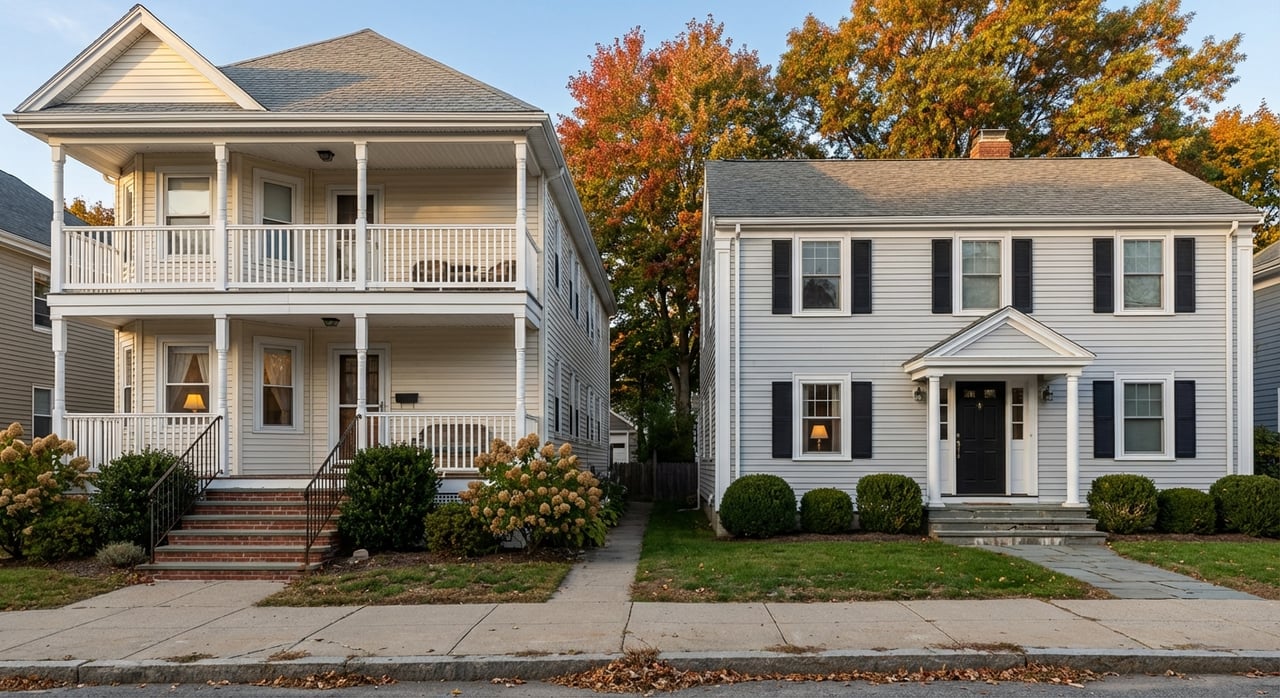
Most condos offer limited private outdoor space, like a balcony or roof deck, along with shared areas. Some townhouse-style condos include small yards. Single-family homes usually provide private yards, more storage, and room for gardening or pets. If a private yard is a must-have, a house or certain two-family properties might fit you better.
Somerville is dense and on-street parking is managed by a residential permit program. Review zones, permit types, and fees on the Somerville Parking page. Deeded or garage parking adds convenience and value, especially near busy squares. When comparing listings, confirm whether a space is exclusive, deeded, or tandem, and factor winter parking rules and visitor needs into your plan.
The MBTA Green Line Extension opened its Union Square branch in March 2022 and completed the Medford branch later in 2022. Proximity to new GLX stations is a key driver for many buyers. Learn more on the city’s Green Line Extension page. If you prioritize a quick ride to Kendall or downtown Boston, a condo near Union Square or Ball Square might be worth the HOA premium.
Each micro-neighborhood has its own tradeoffs in price, space, parking, and transit. Rank your must-haves before you tour.
Use this quick framework to align your decision with your budget and lifestyle:
If you want a side-by-side comparison for specific listings, a local advisor can pull the numbers and documents so you can see the true monthly picture.
Ready to talk through options, neighborhoods, and a custom search plan? Reach out to Mike Cohen for a clear path forward and a pricing game plan tailored to you.
Mike embodies a rare combination of scrappy determination and refined confidence. Known for his personable nature and self-deprecating sense of humor, he is able to genuinely connect with people.
Let's ConnectCompass
126 Newbury St 2nd Floor Boston, MA 02116