If you are thinking about living near Kendall Square, you are probably asking a practical question: what does daily life actually feel like once the workday crowds clear out? This part of Cambridge is known for innovation, transit, and a fast pace, but it also has a growing residential side that many buyers and renters want to understand better. Below, you will get a grounded look at what it is like to move around, run errands, spend weekends, and weigh the trade-offs of calling this area home. Let’s dive in.
Kendall Square functions as a mixed-use district with a huge daytime population and a smaller but growing residential base. The City of Cambridge’s 2024 district assessment places the area at 4,905 residents and more than 74,000 jobs, which helps explain why the neighborhood can feel especially active during the day.
That same assessment reports a median age of 31 and an average household size of 1.82. In everyday terms, that points to a neighborhood shaped by smaller households and working professionals, layered into a district that still serves far more workers and visitors than full-time residents.
The area is closely tied to MIT, biotech, startups, and other high-tech uses. If you like a dense environment with lots of activity, transit access, and a strong work-live connection, Kendall Square may feel like a natural fit.
One of the biggest lifestyle advantages near Kendall Square is that you do not need to build your day around a car. Kendall/MIT station on the Red Line anchors the area, and the broader transportation network supports short trips by foot, bike, and shuttle.
Cambridge highlights EZRide service linking Kendall/MIT with CambridgeSide, Lechmere, North Station, and Cambridgeport. The city also operates a free Galleria Shuttle between Kendall Square and CambridgeSide, which adds another layer of convenience for everyday errands and quick connections.
Walking is a real part of the neighborhood rhythm. So is biking. Cambridge completed the Ames Street bike project to connect East Cambridge and Kendall Square to the Charles River, and improvements on Hampshire Street strengthened bike access between Inman Square and the Port/Kendall Square.
A city survey found that MBTA, walking, biking, and driving all show up as common ways to reach Kendall Square. That matters because it confirms what many people notice right away: this is a genuinely multimodal district, not just a one-train commuter stop.
If you live here, your daily pattern may feel lighter and more flexible than in a more car-dependent neighborhood. You can often structure your day around a short walk to transit, a bike ride to the river, or a quick shuttle trip instead of planning around parking.
Driving is still possible, but it is not the defining lifestyle feature. Public parking is limited, and local planning feedback has pointed to ongoing demand for better wayfinding, pedestrian safety, bike safety, and more reliable transit.
Kendall Square has a strong base of restaurants, cafes, and lunch spots, especially for a neighborhood with such a large office and lab presence. The City of Cambridge maintains a map of small retailers and restaurants in the district, which reflects the area’s active street-level commercial mix.
At the same time, city assessments show that people still want more affordable options, a better retail mix, and more variety in food choices. So if you picture a polished urban district with plenty of places to grab coffee or meet for dinner, that is fair. If you expect every retail need to be perfectly covered, the area is still evolving.
For many residents, that mix works well because convenience is the real selling point. You can usually handle the basics of a busy weekday without going far, which is a big part of Kendall Square’s appeal for professionals and relocation buyers.
Kendall Square stands out for people whose work life blends office, lab, and meeting space. CIC’s flagship campus offers flexible offices, coworking, and meeting space right near Kendall/MIT, while LabCentral operates life-science coworking lab space in Kendall Square through its AI BioHub.
That ecosystem shapes the feel of the neighborhood. Even if you are not working in biotech or tech, you will notice that the district is designed around collaboration, mobility, and people moving between transit, workspaces, and public gathering areas throughout the day.
A lot of people think of Kendall Square as purely work-focused, but that misses an important part of daily life here. MIT’s public-facing amenities help the district feel active beyond office hours.
The MIT Welcome Center is open to the public and located steps from the Kendall/MIT station. MIT Open Space Programming also offers free public events in the Kendall/MIT area, while the MIT List Visual Arts Center is free and open to all.
The MIT Press Bookstore on Main Street adds another everyday cultural touchpoint. These places may not turn Kendall into a traditional arts district, but they do give the area more texture and make it easier to enjoy your surroundings without planning a major outing.
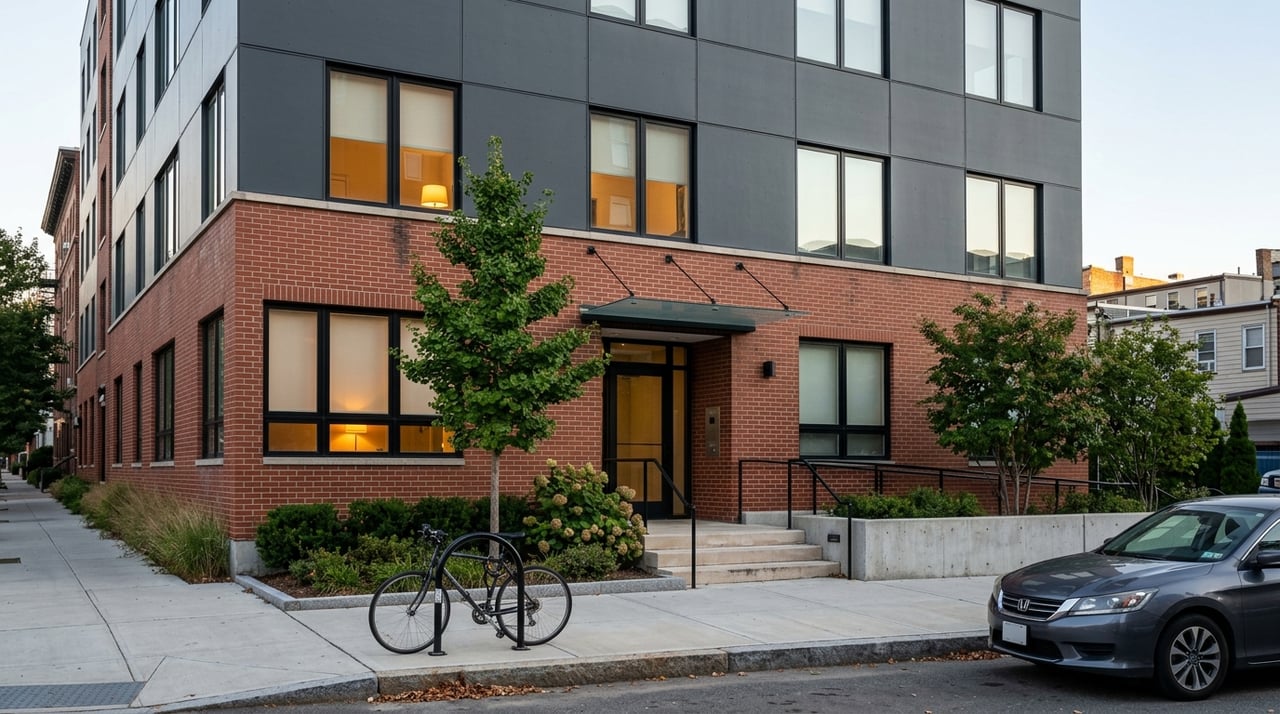
Housing near Kendall Square is varied, and that is important if you are comparing options. The area includes newer condos, apartment buildings, and older Cambridge housing stock on nearby blocks, rather than one single dominant housing type.
The City of Cambridge notes that Kendall Square has seen housing growth alongside hotels, restaurants, and shops. MIT’s Kendall Square Initiative also includes housing as a core use, which signals that residential life is not an afterthought here.
There are also examples of affordable homeownership on the edge of Kendall Square, including the city’s Print Shop Condominiums. More broadly, city planning documents have long emphasized the need for more housing integrated with commercial development and for a mix of incomes and unit sizes.
Living near Kendall Square usually means choosing convenience, access, and energy over quiet and lower costs. The city’s 2024 district assessment lists affordable housing and affordable retail options among the current challenges in the district.
That does not make Kendall Square a bad place to live. It simply means you should go in with clear expectations. If you want to be close to transit, employment centers, and everyday amenities, the value can be strong. If your top priorities are space, calm, and lower monthly costs, other parts of Cambridge may feel more comfortable.
Even with all the labs, offices, and new development, Kendall Square is not just hardscape and towers. Cambridge says it will create more than five acres of new and renovated public open space in Kendall Square and Eastern Cambridge.
The district assessment also notes more than 20 public green and open spaces, including many privately owned spaces designated for public use. In practice, that means plazas, landscaped areas, roof gardens, and places to sit or pause are part of the neighborhood experience.
If you are worried that life here might feel too compressed, these spaces matter more than you might expect. They help break up the density and create breathing room during a lunch break, an evening walk, or a weekend outing.
One of the biggest quality-of-life advantages near Kendall Square is how close you are to the Charles River. The Ames Street bike connection was specifically built to link East Cambridge and Kendall Square to the river, making that access part of everyday movement rather than a special trip.
The Charles River Reservation supports walking, biking, canoeing, kayaking, picnics, and other outdoor activities. Memorial Drive also closes to cars on Sundays from late April through mid-November for Riverbend Park, which creates even more room for recreation.
That river access gives the neighborhood a different personality on weekends. A weekday may revolve around transit, coffee runs, and busy sidewalks. A Saturday or Sunday can shift toward riverfront walks, open space, museum visits, and a slower pace.
It is important to talk honestly about one of the biggest practical trade-offs: construction is part of everyday life in Kendall Square right now. The city’s current updates list active projects including the Kendall/MIT headhouse, the former Volpe site redevelopment, and utility work that is expected to create detours and lane shifts through 2026.
That means convenience and disruption often exist side by side. You may gain better infrastructure, more public space, and more housing over time, but in the short term you should expect some noise, fencing, route changes, and occasional confusion around circulation.
For some buyers, that is a deal-breaker. For others, it is a reasonable trade if they want to live in one of Cambridge’s most connected and actively evolving districts.
Kendall Square tends to work best if you want a fast-moving, transit-oriented Cambridge lifestyle with strong access to work, dining, public amenities, and the river. It can be especially appealing if you value walkability, shorter commutes, and a neighborhood that feels plugged into the broader regional economy.
It may be less ideal if you want a quiet residential feel or a lower-cost entry point. The area is still building out its residential identity, which means you are buying into a neighborhood that is improving and changing at the same time.
If you are weighing Kendall Square against East Cambridge, Cambridgeport, or other nearby areas, it helps to compare not just prices but your day-to-day habits. The right choice usually comes down to how you want your week to function.
If you are exploring Cambridge neighborhoods and want practical guidance on where your budget and lifestyle line up best, Mike Cohen can help you sort through the options with clear, local insight.
Mike embodies a rare combination of scrappy determination and refined confidence. Known for his personable nature and self-deprecating sense of humor, he is able to genuinely connect with people.
Let's ConnectCompass
126 Newbury St 2nd Floor Boston, MA 02116