Menu

Leave a Message

Thank you for your message. We will be in touch with you shortly.

Your Guide to Assembly Row Somerville Living

Picture a place where you can grab coffee, hop on the Orange Line, catch a movie, and stroll a riverside boardwalk, all within a few blocks of home. If that sounds like your kind of lifestyle, living near Assembly Row in Somerville could be a strong fit. You want convenience without giving up neighborhood feel, plus clear answers on costs, commuting, and what day‑to‑day life is really like. In this guide, you’ll get a grounded look at Assembly Row’s amenities, housing options, tradeoffs, and smart next steps so you can decide with confidence. Let’s dive in.

Assembly Row at a glance

Assembly Row is a 40 to 45 acre mixed‑use, waterfront neighborhood that blends street‑level retail, restaurants, entertainment, office buildings, and thousands of homes. Large employers like Mass General Brigham and Puma anchor the office side, while the ground‑floor retail scene fuels the area’s energy every day. Recent coverage highlights the project’s scale, with hundreds of thousands of square feet of retail and millions of annual visits shaping daily life here. For background on the development’s footprint and momentum, read the Boston Globe’s overview of Assembly Row’s rise and impact on Somerville’s economy (source).

The neighborhood grew out of Assembly Square’s industrial past. This area once housed a Ford assembly plant, later becoming a retail strip, before a 2000s master plan set the stage for today’s mixed‑use district. Federal Realty has led much of the commercial redevelopment, and the MBTA added the Assembly Orange Line station as an infill stop to serve the new neighborhood. You can skim the local history and location context on the Assembly Square page and the Assembly station profile (history and context, MBTA station background).

Quick facts:

  • Mixed‑use waterfront district with shopping, dining, offices, and housing (overview).
  • Orange Line station opened in 2014 to serve the neighborhood (station details).
  • Street‑level retail approaches 800,000 square feet, with millions of annual visits (press/developer reporting, see Globe link above).

Daily life: shopping, dining, and events

Day to day, Assembly Row is built for convenience. The main streets are lined with outlet and flagship shops, national fashion and home brands, services, and a grocery for weekly runs. Tenants do change, so the best way to see what is open right now is to check the Assembly Row directory (current shops and dining).

Dining ranges from quick‑casual to sit‑down restaurants, after‑work spots, and family‑friendly options. The property team programs regular promotions and seasonal happenings that keep evenings and weekends lively. If you like having things to do close to home, the events calendar is a good pulse check on what’s coming up next (seasonal events and activities).

Entertainment is a core draw. A 12‑screen AMC theater, the LEGOLAND Discovery Center, and indoor game venues help the neighborhood stay active past standard retail hours. Open spaces also matter here. Sylvester Baxter Riverfront Park offers a boardwalk, lawn, amphitheater, playground, and Mystic River views that make quick outdoor time easy.

A weekday in the neighborhood

  • Morning: Walk to coffee, then catch the Orange Line at Assembly for a direct ride into Boston’s core. After work, meet friends for a riverside dinner.
  • Evening: Pick up an online order from a shop downstairs, see a movie, or catch a programmed concert or food event on the calendar.

A family‑friendly weekend

  • Morning: Playground time and a stroller‑friendly lap along the riverfront boardwalk.
  • Midday: LEGOLAND or a matinee at the AMC, then late lunch nearby.
  • Afternoon: Farmers market or seasonal festival, errands at the Marketplace, and home before dinner with your car still in the garage.

Getting around: T, buses, bikes, and cars

Assembly’s Orange Line station is the headline transit perk. The infill stop opened in September 2014 and is fully accessible, offering a direct Orange Line ride into downtown Boston (station background). Marketing materials often tout a short ride to downtown, but travel times vary by destination and current service. For an exact door‑to‑door estimate, check the MBTA trip planner before your commute.

Several MBTA bus routes serve the Assembly/Marketplace area, which helps with local connections. If you drive, proximity to I‑93 and Route 28 makes regional trips straightforward. That same highway access can bring roadway noise and busy surface streets during peak shopping times. The Assembly Square page provides helpful context on the district’s location and access patterns (location overview).

Parking for errands is simple. Assembly Row operates multiple garages with a clear policy that includes a free short‑stay window and a ticketless license plate system for longer visits. If you host friends or make quick trips, that short‑stay perk is a real plus (parking details).

For biking and walking, you can connect to Mystic River waterfront paths and regional trails. The Somerville Community Path extension and the Mystic Greenways work are improving bike access across the inner‑suburbs network. Some pedestrian and bike links across highway segments are still being planned or built, so it helps to preview your preferred routes.

Housing options near Assembly Row

Within a short walk, you will mostly see new mid‑rise rental buildings, plus a growing number of ownership condos and townhomes. A few blocks out, traditional Somerville housing pops up again on streets in Winter Hill, Ten Hills, and East Somerville.

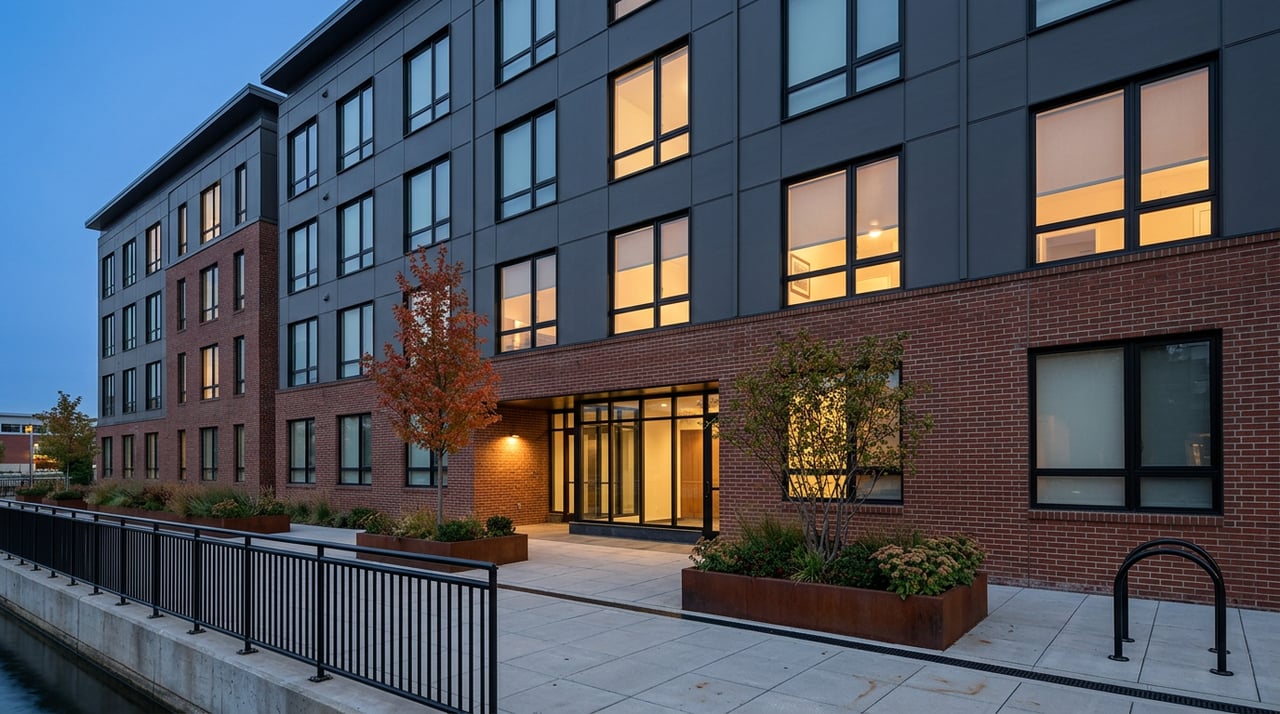
  • New rentals on or near the Row: Large apartment communities such as AVA and other Assembly phases typically offer studio to 3‑bedroom layouts with amenity packages like gyms, lounges, and in some cases pools and courtyards. Asking rents tend to track at or above city averages because of the new construction and location.
  • Ownership condos and townhomes: Newer condos in and around Assembly command a premium for waterfront views, finishes, and walkability. Press coverage and developer materials illustrate the broader scale and desirability of these residences (development context).
  • Nearby single‑family and multi‑family streets: If you want a classic Somerville triple‑decker, two‑family, or a detached house, you will likely look a bit beyond the core Row area toward Ten Hills, Winter Hill, or East Somerville. Inventory is limited and pricing varies by block and condition (area context).

Somerville also runs an active inclusionary housing program. Some Assembly‑area buildings include income‑restricted units allocated through the city’s lottery process. If affordability is part of your search, begin with the city’s program details so you understand timelines and qualifications (Inclusionary Housing Program).

Cost snapshot and rent signals

As of early 2026, Zillow reports that typical Somerville home values sit roughly in the high $800,000s to low $900,000s citywide. Prices vary by neighborhood and housing type, and new construction or waterfront‑adjacent homes near Assembly often trade above city averages. You can monitor current city‑level trends here (Zillow market snapshot).

On rents, recent listings show one‑bedroom apartments near Assembly commonly in the low to mid $3,000s, and two‑bedrooms in the mid $3,000s and up. Building, view, and amenity stacks move those numbers. If you are renting, check live property pages for current availability and specials, since pricing shifts with season and lease‑up cycles.

Tradeoffs to weigh before you buy or rent

  • Ongoing growth: The city’s adopted Assembly Square neighborhood plan envisions substantial additional housing and public‑realm improvements. Expect more residents, more services, and a denser street life over time. That is a positive for convenience, and it also means construction phases and evolving traffic patterns are part of the medium‑term picture (neighborhood plan).
  • Noise and traffic: Easy access to I‑93 and Route 28 is a real benefit for regional trips. Those same highways and busy shopping days can bring roadway noise and heavier visitor traffic, especially on weekends and during events (location overview).
  • Climate and flood risk: Assembly’s riverfront location is a lifestyle win, and it also makes climate planning relevant. Somerville’s Climate Forward materials identify coastal and stormwater risk areas and outline resilience work. If you are looking near the water, review FEMA flood maps and talk with your insurer about coverage and costs (city climate context).
  • Public services: The city and its partners have invested in local services tied to growth, including a new fire station to serve the Assembly area. That is useful context if you are weighing whether services match the added density (service investment update).

Who tends to love living here

  • Transit‑oriented professionals who value a short Orange Line ride and a walkable daily routine.
  • Downsizers who want elevator buildings, amenities, and easy access to shopping and dining.
  • Families who like playgrounds, the LEGOLAND Discovery Center, the AMC, and frequent events. If you want a private yard or a classic multi‑family for long‑term flexibility, you may focus slightly beyond the core Row streets in Ten Hills, Winter Hill, or East Somerville.

Smart tips for touring homes near the Row

  • Compare commute options at your actual hours. Test the Orange Line and a driving route during your typical peak.
  • Ask about building acoustics and orientation. Homes facing highways or busy event corridors may experience more noise than courtyard or interior‑street units.
  • Clarify parking. For renters or condo buyers, confirm garage availability, guest options, EV charging, and monthly costs. For visitors and errands, review the short‑stay policy in the public garages (parking details).
  • Check bike storage and trail access if you plan to ride often.
  • If considering income‑restricted units, read the city’s inclusionary housing steps early and get your documents ready (program overview).
  • For river‑adjacent homes, review FEMA flood maps, the city’s climate planning, elevation, and current insurance quotes (climate context).
  • For buyers, compare HOA fees and what they cover in new construction condos. For renters, weigh amenity packages against monthly costs and lease flexibility.

The bottom line

If you want a lifestyle that puts shopping, dining, transit, and the riverfront at your doorstep, living near Assembly Row delivers. You get a modern neighborhood with steady programming and strong access to Boston, balanced by urban tradeoffs like event crowds, highway proximity, and an evolving construction cycle as the area continues to grow. With clear expectations and the right guidance, you can find a home that fits your day‑to‑day life and your long‑term goals.

Ready to tour options on and around the Row or compare nearby streets like Ten Hills and Winter Hill? Reach out to Mike Cohen for local advice and a plan that matches your timing and budget. Connect with Mike Cohen to start a focused search.

FAQs

How does commuting from Assembly Row to downtown Boston work?

  • The MBTA’s Assembly station on the Orange Line offers a direct ride into central Boston. Exact travel times vary by destination and current service, so check the MBTA trip planner for your specific route (station background).

What are typical rents near Assembly Row right now?

  • Recent listings commonly show one‑bedrooms in the low to mid $3,000s and two‑bedrooms in the mid $3,000s and up. Pricing varies by building, view, and amenities, and it changes with season and availability.

Is there convenient parking for errands and guests?

  • Yes. Assembly Row runs multiple garages with a free short‑stay window for quick trips and paid options for longer visits, using a ticketless license plate system (parking policy).

What kinds of homes are within walking distance of the Row?

  • You will find new mid‑rise rentals and newer condos or townhomes near the core, with classic single‑family and multi‑family homes appearing a bit farther out in Winter Hill, Ten Hills, and East Somerville (area context).

Are there family‑friendly activities close by?

  • Yes. The neighborhood includes the LEGOLAND Discovery Center, a 12‑screen AMC theater, and seasonal programming like concerts and markets, along with the Sylvester Baxter Riverfront Park for playground and boardwalk time (current directory and events).

How should I think about flood risk near the Mystic River?

  • River access is a lifestyle benefit, and it makes climate planning important. Review FEMA flood maps, ask about elevation and insurance, and read Somerville’s Climate Forward materials for resilience projects and context (city climate overview).

Work With Mike

Mike embodies a rare combination of scrappy determination and refined confidence. Known for his personable nature and self-deprecating sense of humor, he is able to genuinely connect with people.

Let's Connect